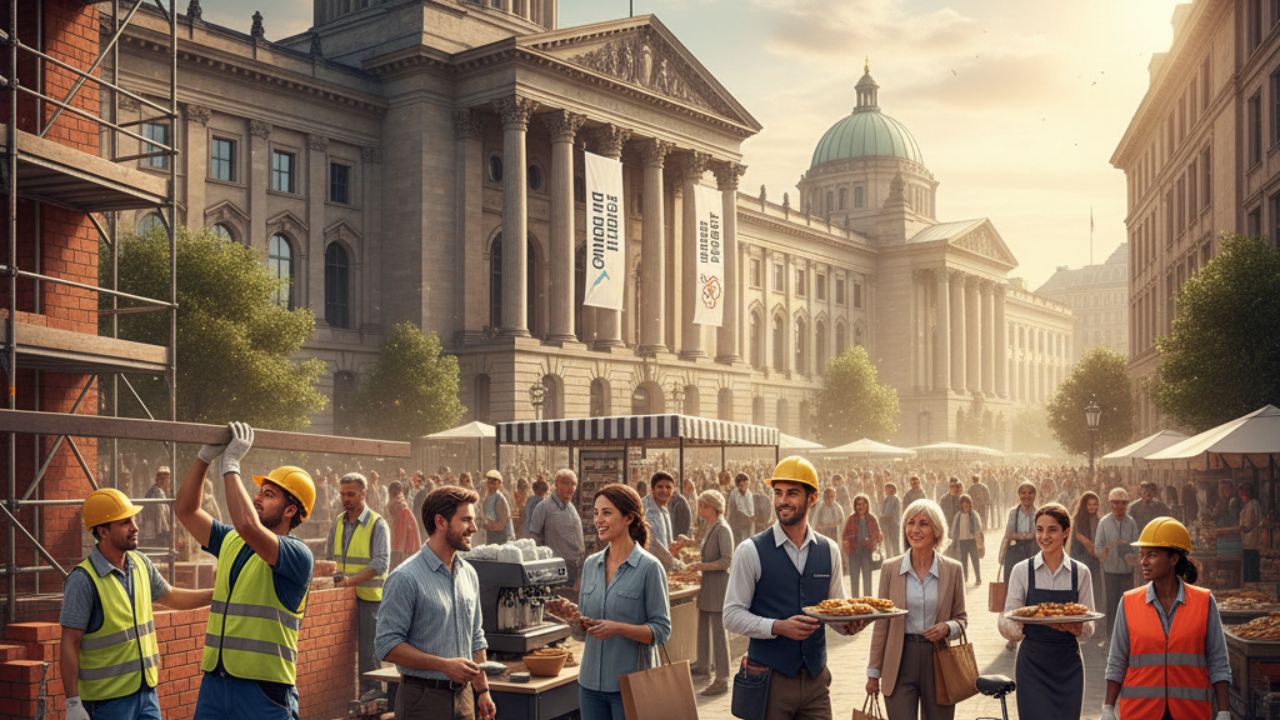
Germany often conjures images of precision engineering, high-tech automotive factories, and advanced medical research. It is the industrial powerhouse of Europe, renowned for its “Made in Germany” seal of quality. However, behind the curtain of highly specialized engineering and digital innovation lies a vast, essential, and often overlooked engine keeping the country running: the market for unskilled labor.
For decades, the conversation regarding German employment has focused heavily on the Fachkräftemangel—the shortage of skilled professionals. While the need for nurses, IT specialists, and engineers is undeniably acute, there is a parallel demand for general labor. Warehouses need staffing, construction sites need support, hotels need housekeeping, and the agricultural sector needs seasonal assistance.
For newcomers to Germany, or those looking to enter the workforce without a specialized degree or vocational training certificate (Ausbildung), this market presents a unique mix of stability and challenge. It serves as a vital entry point into the German economy, offering wages that are among the highest in Europe for entry-level work, alongside strong legal protections. This guide explores the reality of unskilled work in Germany, breaking down where the jobs are, the hurdles workers face, and the future of this critical economic sector.
The Current State of Unskilled Labor
Unskilled labor, often referred to in Germany as Helfertätigkeiten (helper activities) or Ungelernte Arbeit, makes up a significant portion of the workforce. Unlike many other economies where unskilled labor is often equated with precarious, underpaid employment, Germany’s rigorous labor laws provide a floor of protection that makes these roles viable for living.
Key Sectors for General Labor
The demand for general labor is not evenly distributed. It concentrates heavily in specific industries that keep the physical economy moving.
Logistics and Transport
As e-commerce continues to dominate retail, the need for warehouse staff, pickers, packers, and delivery drivers has exploded. Major hubs near Frankfurt, Leipzig, and the Ruhr region are constantly recruiting. These roles require physical stamina and reliability but rarely demand fluent German.
Hospitality and Gastronomy
Tourism remains a pillar of the German economy. Hotels and restaurants require dishwashers, kitchen porters, housekeeping staff, and room attendants. While front-of-house roles usually require German language skills, back-of-house roles are often accessible to non-German speakers.
Construction and Manufacturing
Germany is always building. Construction sites require general laborers to assist skilled tradespeople, manage materials, and handle site cleanup. Similarly, manufacturing plants—particularly in the automotive supply chain—employ thousands of workers for assembly line tasks that can be learned quickly on the job.
Cleaning and Facility Management
Commercial and industrial cleaning is a massive employer. From office buildings to industrial factories, sanitation crews are essential. These jobs often offer flexible hours, making them popular for those balancing other commitments, such as language classes or childcare.
Wages and Working Conditions
One of the most attractive aspects of the German labor market is the statutory minimum wage (Mindestlohn). As of 2024, the minimum wage stands at €12.41 per hour, with scheduled increases on the horizon. This applies to all workers, regardless of skill level or nationality (with very few exceptions).
This means a full-time unskilled worker (40 hours/week) earns a gross monthly income of roughly €2,150. While taxes and social contributions in Germany are high (covering health insurance, pension, and unemployment insurance), the net income remains livable, especially outside of major metropolitan centers like Munich or Hamburg.
Furthermore, unskilled workers benefit from the same robust employment rights as professionals:
- Paid Vacation: A legal minimum of 20 days per year for a 5-day work week, though many employers offer 25 to 30 days.
- Sick Pay: Continued wage payment for up to six weeks in case of illness.
- Notice Periods: Strict protection against immediate firing after a probationary period.
Challenges and Opportunities
Entering the German job market without qualifications is not without friction. While the opportunities are plentiful, the barriers to entry—and advancement—can be steep.
The Language Barrier
The German language is the single biggest hurdle. While it is possible to find work in an Amazon warehouse or an Irish pub kitchen speaking only English, your options are severely limited without Deutsch. Bureaucracy, rental contracts, and workplace safety instructions are almost exclusively in German.
Workers who do not speak the language often find themselves stuck in the lowest-paying roles with little chance of promotion. However, this challenge also presents an opportunity. Many employers are now so desperate for staff that they offer subsidized language courses or are willing to hire candidates with A1/A2 level proficiency, provided they show a willingness to learn.
The Cost of Living Crisis
While wages are decent, the cost of living in Germany has risen sharply. Energy costs and rent have outpaced wage growth in many areas. An unskilled worker living in Berlin or Munich may struggle to find affordable housing, often spending 50% or more of their net income on rent. This has led to a trend of workers moving to “B-cities” or rural areas where the rent is cheaper, though this often necessitates a car or reliance on public transport.
The Threat of Automation
Routine tasks are the easiest to automate. Cashier jobs are vanishing in favor of self-checkout; warehouse picking is increasingly robotic; and industrial cleaning is seeing the introduction of automated machinery. This places long-term pressure on the unskilled sector. Workers must view these roles not as a final destination, but as a stepping stone.
Government Initiatives and Support
The German government recognizes that it cannot run its economy solely on doctors and engineers. There is a concerted effort to support the general workforce and integrate foreign workers into the system.
The “Chancenkarte” (Opportunity Card)
Introduced to modernize immigration, the Opportunity Card allows non-EU citizens to come to Germany to look for work for up to a year if they meet certain point-based criteria. While often discussed in the context of skilled workers, it opens doors for those with partial qualifications or relevant experience to enter the market and potentially take on general labor while upskilling.
The Bundesagentur für Arbeit (Federal Employment Agency)
The Federal Employment Agency is a massive institution dedicated to matching workers with jobs. They offer specific services for those without qualifications, including:
- Career Counseling: Helping assess what industries suit a candidate’s physical capabilities.
- Funding for Qualifications: The Qualifizierungschancengesetz (Qualification Opportunities Act) allows the state to pay for training for current employees whose jobs are at risk due to structural changes (like automation). This means a warehouse packer could theoretically have their truck driving license funded by the state.
Integration Courses
The Federal Office for Migration and Refugees (BAMF) creates access to integration courses (Integrationskurse). These are subsidized language and culture classes. For many unskilled workers, attending these courses part-time is the key to unlocking better-paying jobs.
Real-World Success: Case Studies
To understand the trajectory of unskilled labor, it helps to look at real-world scenarios of how workers navigate this system.
Case Study 1: The Logistics Ladder
Profile: Mateo, 28, from Spain.
Situation: Moved to Germany with no German skills and no degree.
Trajectory: Mateo started as a “Picker” in a distribution center near Cologne. The work was physically demanding and repetitive. However, he showed reliability. After one year, his employer utilized a government subsidy to pay for his forklift license (Staplerschein).
Outcome: With the forklift license, his hourly wage increased by €2.50. Two years later, having learned functional German on the job, he was promoted to Shift Lead. He now manages a team of 15 people.
Lesson: In logistics, reliability and additional certificates (forklift, safety) are often valued more than university degrees.
Case Study 2: From Au Pair to Hospitality
Profile: Sarah, 24, from Kenya.
Situation: Arrived as an Au Pair, then transitioned to a job-seeking visa.
Trajectory: Sarah took a job in a hotel kitchen washing dishes. It was minimum wage work. However, she used the stable income to pay for evening German classes at a Volkshochschule (community college). She practiced her German with the chefs.
Outcome: Once she reached B1 level proficiency, she applied for an Ausbildung (apprenticeship) in Hotel Management within the same hotel chain. Because she already knew the operations, they accepted her immediately. She is now transitioning from unskilled labor to a skilled professional track.
Lesson: Unskilled work can finance the education needed to leave unskilled work.
Future Outlook: A Sector in Transition
The future of unskilled work in Germany is defined by a paradox: technology is reducing the need for humans in some areas, while demographics are increasing it in others.
The Demographic Gap
Germany has an aging society. As the “Baby Boomer” generation retires, millions of vacancies are opening up. This creates a massive vacuum not just in leadership, but in service. The elderly care sector, while requiring some training, relies heavily on nursing assistants and home helpers—roles that are often accessible with short-term qualifications. The demand for human hands in care, transport, and personal services will likely skyrocket, insulating these jobs from recession.
The Shift to “Semi-Skilled”
The definition of “unskilled” is changing. In the future, a warehouse worker won’t just lift boxes; they will operate a tablet that controls a robot. A cleaner won’t just use a mop; they will monitor automated sanitation bots. The job market is shifting toward “semi-skilled” work. The ability to use digital interfaces and adapt to new technology will become just as important as physical strength.
This suggests that the “unskilled” market will remain robust, but it will require higher levels of adaptability. The workers who thrive will be those who take advantage of employer-sponsored training to bridge the gap between manual labor and technical operation.
Frequently Asked Questions
Do I need a visa to work in an unskilled job in Germany?
If you are an EU/EEA/Swiss citizen, you do not need a visa. You have full access to the labor market. If you are from a non-EU country (third-country national), it is generally difficult to get a work visa strictly for unskilled labor unless you are from the Western Balkans (under the Western Balkans Regulation) or are utilizing specific pathways like the Opportunity Card or working holiday visas.
Is the minimum wage enough to live on?
Yes, but it depends on your location and lifestyle. In cheaper regions (often in Eastern Germany or rural areas), minimum wage provides a comfortable, albeit modest, life. In expensive cities like Munich, minimum wage will likely require you to live in a shared apartment (WG) and budget carefully.
Can I bring my family?
Generally, family reunification visas require the main applicant to be a “skilled worker” or to have sufficient income and living space to support the family without state aid. This can be challenging on a single minimum-wage income, but it becomes more feasible if both partners work or if the main earner progresses to a higher wage bracket.
Taking the Next Step
Germany’s market for unskilled work is not a dead end; for many, it is a launchpad. It offers immediate entry into a stable economy, high standards of worker protection, and a pathway to residency.
However, success requires strategy. It requires viewing the initial job as a foundation rather than a ceiling. By leveraging the stability of the German social system, utilizing government-funded training, and tackling the language barrier head-on, general labor can be the start of a prosperous life in the heart of Europe.
If you are considering this path, start by checking the Make it in Germany official government portal, which offers reliable, English-language advice on visas and job hunting. The opportunity is there—it just requires the work to seize it.